
FDI Drives Green Growth in VietnamJan 14, 2025
Foreign Direct Investment (FDI) has driven Vietnam’s efforts to achieve sustainable economic growth, with a significant focus on renewable energy, clean manufacturing, and environmental technology. Vietnam’s appeal to international investors seeking eco-friendly projects has grown due to the government’s commitment to green initiatives and favorable policies. This article analyzes the wave of FDI flowing into Vietnam’s green economy, examines its impact on technology transfer, job creation, and sustainable economic growth, and compares Vietnam's progress with neighboring countries.
Growing FDI in Renewable Energy
Vietnam has witnessed substantial FDI inflows into renewable energy projects, particularly in solar and wind power. Investors from Japan, South Korea, and the European Union are leading in funding large-scale energy projects across the country. According to data from Vietnam's Ministry of Planning and Investment, renewable energy projects have drawn billions of dollars in FDI in recent years, especially in provinces like Bình Thuận and Ninh Thuận, which are ideal locations for solar and wind farms. From 2015 to 2022, Vietnam attracted $106.8 billion in foreign direct investment (FDI) into the renewable energy sector, ranking second among developing economies worldwide.
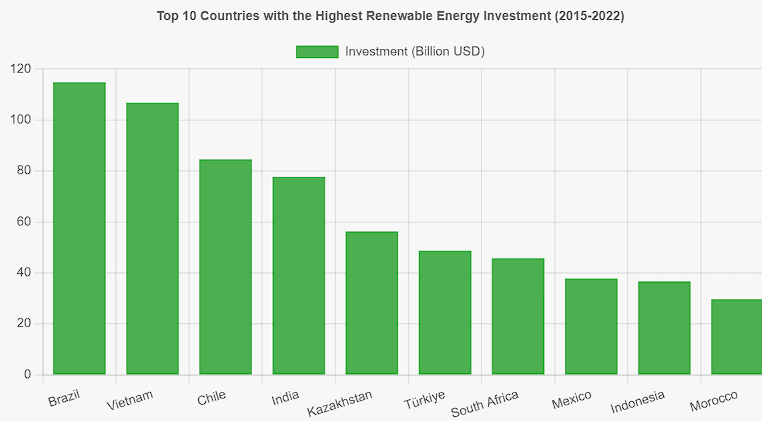
The impact of these investments goes beyond economic returns. The influx of capital into renewable energy enables technology transfer, allowing Vietnam to access advanced technologies that improve efficiency and reduce costs. This technology transfer accelerates Vietnam’s path toward a low-carbon economy, making renewable energy more accessible and affordable for local businesses and households.
Clean Manufacturing and Environmental Technology
In addition to renewable energy, clean manufacturing and environmental technologies are attracting substantial foreign investment. Recognizing the global shift towards eco-friendly production, many multinational corporations are establishing sustainable production facilities in Vietnam. Companies like Samsung and LG are incorporating energy-saving technologies and emission-reduction measures in their factories, setting an example for local manufacturers and promoting industry-wide shifts towards greener practices.
Environmental technology, particularly in waste management and water treatment, is another sector receiving significant FDI. Japan, for example, has invested in Vietnam’s waste-to-energy projects, helping address the growing waste management challenges in urban centers. These projects not only address critical environmental issues but also support Vietnam's efforts to build a circular economy where waste materials are reduced, reused, and recycled.
Positive Impacts of FDI on Green Jobs and Economic Growth
One of the significant benefits of FDI in green projects is job creation. Green investments lead to the development of “green jobs” that contribute to environmental protection, ranging from jobs in solar panel manufacturing to positions in sustainable farming. According to a report from the International Labour Organization (ILO), green initiatives in Vietnam are expected to create thousands of new jobs annually. As renewable energy plants, eco-friendly manufacturing facilities, and waste management projects expand, so does the need for skilled labor, creating opportunities for the local workforce.
FDI also fosters sustainable economic growth by increasing the country’s economic resilience. Green projects are less affected by fluctuations in fossil fuel prices, and the focus on renewable resources allows Vietnam to reduce its reliance on imported energy. This shift strengthens the country's economic stability and supports long-term growth aligned with environmental sustainability goals.
Comparative Analysis: Vietnam vs. Regional Peers
Compared to other Southeast Asian nations, Vietnam has been proactive in attracting FDI for green projects, surpassing countries like Thailand and Malaysia in solar energy capacity. Vietnam’s solar energy sector, for instance, grew at an impressive rate, making the country one of the top solar energy producers in Asia. While other countries in the region are also investing in green projects, Vietnam’s proactive policies and investment incentives give it a competitive edge. Government incentives, including tax breaks, land rent reductions, and favorable loan terms, make Vietnam an attractive destination for green FDI.
FDI plays a pivotal role in Vietnam’s journey towards sustainable development, providing the financial resources, technology, and expertise needed to drive green growth. Through renewable energy, clean manufacturing, and environmental technology investments, FDI supports Vietnam in achieving its sustainable development goals (SDGs) and fulfilling its commitments to international climate agreements such as the Paris Agreement. As Vietnam continues to improve policies that attract eco-friendly investments, FDI will remain essential in helping the country build a green economy and a resilient future.